
.jpg)
Designing and operating a courthouse requires more than courtrooms and chambers—it demands a carefully choreographed security strategy. One of the most critical components of that strategy is the secure movement of detainees. From arrival to courtroom appearance and back again, every step must be deliberate, controlled, and separated from public and staff circulation.
The most successful courthouses approach this process as a structured sequence of zones. Each zone builds upon the last, maintaining custody, minimizing risk, and preserving the dignity of the judicial process.
Zone 1: Arrival at the Vehicle Sallyport
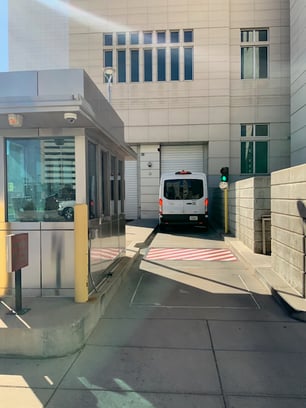
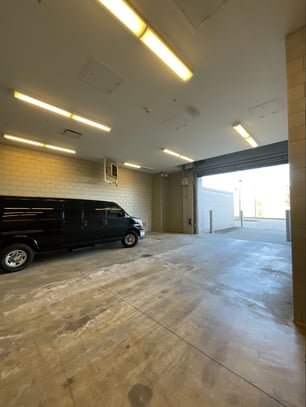
The process begins at the vehicle sallyport—the secure threshold between the outside world and the courthouse interior. This is not simply a garage; it is the first controlled transfer point in a tightly managed chain of custody.
A properly designed sallyport is enclosed, secured, and sized to accommodate the full range of transport vehicles, from police cruisers to vans and even full-size buses. Whether configured as a drive-through handoff area or as a multi-bay parking arrangement where several vehicles can be staged at once, it must allow sufficient maneuvering space to avoid congestion or unsafe movements.
Access to the sallyport should occur through a secure driveway, and controlled by either the control room security officer or a card reader that activates a high-speed overhead door. Once inside, activity should be visible to the security control room—either directly or through closed-circuit television monitoring. There should be no blind spots.
In many jurisdictions, transport officers deliver detainees but do not accompany them into the building. In those cases, the sallyport must support a formal custody transfer to court security staff. If intake processing cannot happen immediately, a secure waiting area with an adjacent toilet room should be provided. The objective at this stage is simple: maintain custody integrity while transitioning detainees safely into the building.
Zone 2: The Cellblock—Primary Detainee Holding
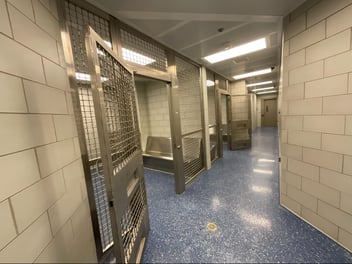
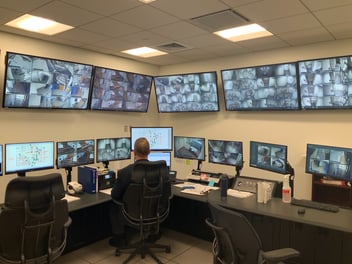
From the sallyport, detainees move into the primary holding area, commonly known as the cellblock. Ideally, this area is located on the lowest floor of the courthouse and directly adjacent to the sallyport, reducing vertical movement and limiting exposure to other building occupants. When adjacency is not possible, movement between the two must occur via secure corridors and a dedicated elevator used exclusively for detainees.
This dedicated circulation path is one of the most important design principles in courthouse security. Detainees should never share corridors or elevators with the public, judges, or staff. The path must be access-controlled and continuously monitored.
Flexibility is key within the cellblock. A mix of single and group holding cells allows staff to manage different classifications of detainees effectively. The space may also include booking rooms, property storage, isolation cells, observation cells, and washrooms, depending on operational needs.
Separation requirements are particularly important in this zone. If the courthouse includes a juvenile court component, sight-and-sound separation between juveniles and adults is mandatory. This often requires distinct access points and segregated holding areas. Other classifications—such as co-defendants, gender separation, or protective custody—must also be accommodated without compromising security or operational efficiency.
The cellblock functions as the operational hub of detainee movement. All subsequent transitions originate here.
Zone 3: Attorney Interview Areas
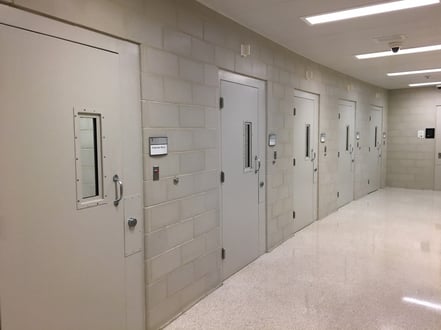
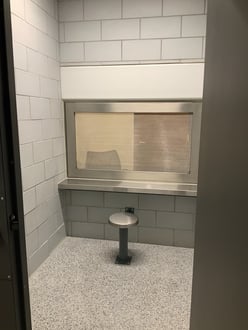
The right to legal counsel is fundamental to due process, and courthouses must provide secure and confidential spaces for in-custody defendants to meet with attorneys. These interview rooms are typically accessed directly from the cellblock through a secure corridor controlled by a card reader.
The interview suite should remain within the secure perimeter and be monitored via CCTV in circulation areas, though not inside confidential meeting rooms. Most interview rooms are designed as split spaces: the detainee is escorted to the interview area and enters from the secure side, the attorney from the public or restricted staff side, and a secure barrier separates the two while allowing communication.
The design must balance safety and confidentiality. The goal is to allow meaningful legal consultation without compromising custody or introducing security risks into adjacent public areas.
Zone 4: Courtroom Holding and Appearance
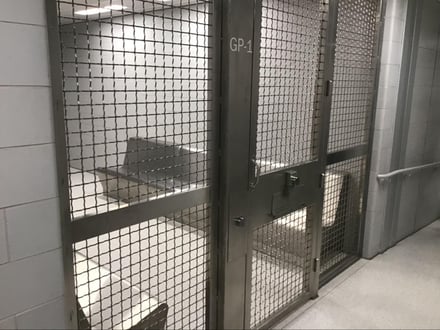
When court proceedings are ready to begin, detainees are moved from the cellblock to courtroom holding. This transition typically involves a secure corridor connecting directly to a dedicated elevator. Like every other segment of the secure path, this route should be access-controlled and continuously monitored.
The elevator should discharge directly into a restricted courtroom holding area which, in my opinion, is one of the most important spaces in a courthouse. This area acts as a staging zone, containing a mix of single and group cells that allow security staff to organize detainees in advance of their appearances. Recently, I have noticed a trend toward court personnel requesting that at least one interview room be provided in this area for attorneys to meet with in-custody defendants prior to or during their court proceedings.
From here, detainees are escorted into the courtroom in a controlled manner. Timing and coordination are essential to prevent unnecessary mingling or delays.
Reversing the Sequence
Once court proceedings conclude, the entire process unfolds in reverse. Detainees return from the courtroom to the holding area, then are escorted back via secure elevator to the cellblock. Depending on the outcome of the hearing, they may be reclassified, released, or prepared for transport.
If returning to custody elsewhere, detainees are escorted back through the secure corridor to the sallyport, where they are loaded into transport vehicles under supervision. As with arrival, vehicle staging and exit must be orderly and controlled. Incoming and outgoing detainees should not overlap in ways that create confusion or risk.
Throughout the reverse sequence, the same principles apply: dedicated circulation, strict separation, continuous monitoring, and formal custody documentation.
Conclusion: Security as Choreography
The secure movement of detainees through a courthouse is best understood as choreography rather than containment. Each zone—sallyport, cellblock, interview rooms, and courtroom holding—plays a defined role in a carefully structured progression.
When thoughtfully designed and rigorously operated, this zoned approach protects the public, court personnel, attorneys, and detainees alike. It preserves order, supports due process, and ensures that security enhances rather than disrupts the judicial mission.
In the end, successful courthouse security is not about imposing barriers—it is about creating a seamless, controlled pathway through one of the most complex, and potentially volatile, civic environments in our communities.

Get your copy of the Fundamentals of Courthouse Design
.jpg?width=352&name=Hybrid%20Office%20(blog).jpg)

.jpg?width=352&name=Future%20Historic%20Courthouses%20(blog).jpg)