.jpg)
When people think about security, they often picture cameras, alarms, and locked doors. While these tools are important, they are only one part of a comprehensive approach to safety. How a property is designed, organized, and maintained can be just as critical in preventing incidents and promoting a secure environment.
This concept is known as Crime Prevention Through Environmental Design (CPTED). In simple terms, CPTED involves designing and maintaining spaces to discourage criminal activity. It emphasizes visibility, controlled access, and an environment that promotes awareness and a sense of ownership.
As a certified CPTED practitioner, I apply CPTED principles when conducting security assessments to evaluate how a facility’s layout and surroundings may affect safety and security. Many improvements identified through this approach are simple, practical, and cost-effective to implement.
In this blog, I’ll provide a basic overview of the four CPTED principles and explain how they contribute to effective security assessments.
Understanding the Basics of CPTED
CPTED is grounded in a simple idea: people’s behavior is influenced by their surroundings. When spaces are well-lit, clearly organized, and properly maintained, they are more likely to discourage unwanted activity. Conversely, areas that are dark, isolated, or poorly maintained can create opportunities for crime.
Security assessors evaluate how the physical environment influences movement, visibility, and control within a property. Their assessment extends beyond the building itself to include parking areas, walkways, entrances, landscaping, and gathering spaces.
Below is a breakdown of the four CPTED principles and a description of each:
1. Natural Surveillance: “See and Be Seen”
Natural surveillance focuses on increasing visibility so that people can easily observe what is happening around them. Well-lit, open spaces make individuals more aware of their surroundings and discourage unwanted behavior.
During a security assessment, evaluators often look for factors that either improve or limit visibility. This may include checking lighting levels in parking lots and along walkways, reviewing window placement near entrances, and identifying landscaping that blocks lines of sight. Overgrown shrubs, tall hedges, or poorly positioned structures can create blind corners and areas where individuals may go unnoticed.
Improving natural surveillance may involve simple changes such as trimming landscaping, upgrading lighting, or adjusting the layout of spaces so staff, residents, or visitors can more easily observe activity.
2. Natural Access Control: “Guide People Where To Go”
Natural access control uses physical features to guide people toward appropriate areas while discouraging entry into restricted spaces. Elements such as fences, landscaping, walkways, paths, lighting, and signage can help direct visitors along intended routes and away from unauthorized areas of a property.
During a security assessment, evaluators often review the number and placement of entrances, their visibility, and whether pathways naturally lead visitors to the correct locations. They also consider how features such as fencing, landscaping, and signage influence people's movement through the site.
The goal is not always to completely block access, but rather to clearly communicate where access is permitted and where it is limited. When movement through a space is intuitive and well-defined, people are more likely to follow the intended paths.
3. Territorial Reinforcement: “This Place Belongs to Someone”
Territorial reinforcement focuses on creating a clear sense that a property is owned, monitored, and cared for. When people can easily distinguish between public and private spaces, they are more likely to recognize and respect those boundaries.
This can be achieved through signage that identifies ownership and outlines rules for using the space, as well as landscaping or fencing that clearly mark property lines. Adding distinctive features—such as color, decorative elements, or well-defined design—can also help establish a sense of identity. Low fences or walls can further define restricted areas, such as those around mechanical equipment or service spaces.
Even small details can make a difference. When a property appears organized and like it belongs to someone, it sends a clear message that the space is actively managed and that people are paying attention to what happens there.
4. Maintenance: “Keep It Clean and Cared For”
Maintenance is a key component of CPTED. A property that is clean, orderly, and well-maintained signals that it is actively managed and that its condition matters. Regular upkeep can help discourage unwanted behavior and contribute to a safer environment.
Simple practices can make a noticeable difference. For example, pick up trash daily, especially in areas visible from public spaces. Ensure trash and recycling bins are easily accessible and kept clean, and post “No Littering” signs to discourage residents and visitors from littering. Regularly maintain facilities, mow grass, and keep landscaping features trimmed and well cared for.
This principle is often linked to the Broken Windows Theory, which suggests that visible signs of neglect can encourage further disorder or unwanted activity.
Security assessments frequently identify maintenance issues that may affect safety. Addressing concerns such as broken lighting, damaged fencing, or overgrown landscaping may seem minor, but these improvements can significantly enhance a property’s safety, appearance, and overall functionality.
Spotting Risks: A CPTED Assessment in Action
A CPTED assessment is more than a walkthrough—it’s a careful analysis of how a property’s design and environment influence safety. When conducting an assessment, security professionals examine the entire site to identify vulnerabilities and opportunities for improvement.
Assessors look for blind spots where activity is difficult to see, entrances that are hard to monitor, and pathways that allow people to approach buildings unnoticed. High-traffic areas such as parking lots, outdoor gathering spaces, walkways, and landscaping features receive particular attention, as these are often where safety issues emerge.
Evaluators also consider how the property functions during different times of day. A space that appears safe in daylight can take on a completely different risk profile at night if lighting is insufficient, poorly positioned, or unevenly distributed. Shadows, dark corners, and unlit pathways can create opportunities for unwanted activity, even in otherwise well-maintained areas.
During a CPTED assessment, professionals assess both environmental factors—like landscaping, fencing, and building orientation—and behavioral cues, such as how people naturally move through a space. By combining these observations, assessors can identify areas where the environment either encourages safety or inadvertently invites risk.
Using CPTED to Identify Improvements
Many properties face common environmental issues similar to those discussed in the four CPTED principles. Fortunately, solving these problems is often easier than people think. One of the benefits of CPTED is that many improvements are simple and inexpensive. In many cases, organizations can make important security upgrades without huge construction projects or costly technology.
Some examples of common CPTED improvements include trimming shrubs, adding consistent exterior lighting, installing clear signage, adjusting seating areas, and redirecting walkways to guide visitors toward monitored entrances. While these changes may seem minor, they can significantly improve visibility, access control, and overall property safety.
Schools benefit greatly from implementing CPTED principles because they are affordable and highly effective. One school district I evaluated properly maintained its property near the building, but lacked a well-maintained perimeter fence. I observed significant overgrowth that not only blocked sightlines but could also assist someone in climbing the fence to gain access to school property.
I explained the concerns to school administrators and collaborated with them to develop a maintenance plan with the district that involved county workers clearing the shrubbery. Removing this overgrowth quickly restored visibility and enhanced natural surveillance at minimal cost for the school.
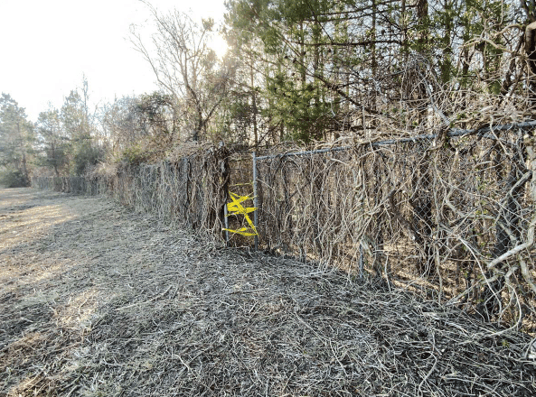 Overgrown shrubbery taking over a school’s perimeter fence
CPTED works best when combined with other security measures. Cameras, access control, staff awareness, and clear procedures all help protect a facility. But when the environment itself encourages safety, these measures become much more effective. A well-designed space naturally prevents problems before they happen.
Creating Safer Spaces Through Design
Security isn’t just about fixing problems—it’s about designing spaces that prevent them. Thoughtful layout, clear sightlines, well-lit pathways, and organized landscaping signal that a property is cared for and monitored.
By applying CPTED principles, organizations can create environments that naturally encourage safe behavior and reduce risk. Thoughtful design and maintenance transform a property into a space that is not only functional but also secure, welcoming, and resilient against potential threats.
Get your copy of the Fundamentals of Courthouse Design