.jpg)
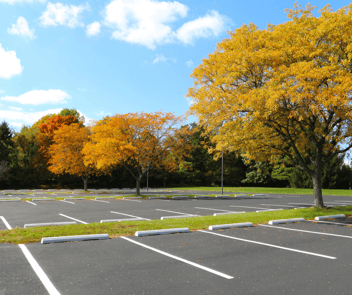
Parking is one of the most common—and most contentious—issues raised during courthouse planning. Judges, jurors, staff, and the public experience parking very differently, but one thing is consistent: when parking does not work, it quickly becomes a visible symbol of operational inefficiency and frustration.
Unlike many civic buildings, courthouse parking demand peaks sharply around court schedules. Jurors arrive at the same time, hearings overlap, staff remain on site throughout the day, and the public expects clear, convenient access. Yet parking is often planned using generic zoning ratios or outdated benchmarks that fail to reflect how courthouses actually function.
This blog outlines a logic-based approach to courthouse parking grounded in operational realities. It explains why parking is uniquely challenging for courts, identifies key planning assumptions, and walks through two example scenarios to show how parking demand can be calculated in a clear and defensible way.
Why Parking Is a Courthouse Problem
Courthouses differ from most civic buildings in several fundamental ways. Court calendars create highly synchronized demand, producing predictable but intense parking peaks. Multiple user groups—judges, staff, jurors, court security, attorneys, and the public—each have distinct parking needs and arrival patterns. Security requirements further complicate planning, as secured parking for judges and in-custody circulation reduces flexibility. These challenges are often compounded by limited site options, as many courthouses are located in dense downtown areas where land is constrained and structured parking is costly.
When these factors are not explicitly considered, parking is frequently underbuilt—creating daily frustration.
Key Parking Assumptions for Courthouse Planning
Effective courthouse parking analysis begins with the right assumptions. Judges typically require one secured space each, with additional secured spaces for visiting or rotating judges. These spaces are exclusive and generally unavailable to other users.
Court staff—including clerks, probation officers, administration, and security—typically arrive early and occupy parking spaces throughout the day. Staff parking demand is typically below 100 percent of total staff, reflecting leave, travel, and limited telework, with additional consideration for potential shift overlap for security personnel.
Jurors represent the largest variable in parking demand. Jury-capable courtrooms and jury assembly rooms can generate substantial morning peaks, as summonses often require far more potential jurors than are ultimately seated. Even midsize courts may summon 100 or more jurors on a given day, while large courts can summon several hundred. Juror parking demand typically declines by midday as panels are reduced.
Public and attorney parking is typically characterized by short stays and high turnover, with demand concentrated around docket start times. Accessibility and proximity often matter more than total space count. Parking should always be planned for peak concurrent conditions, not daily averages, as jury trials, motion dockets, and hearings frequently overlap. Some dockets, such as high-volume traffic calendars, can generate hundreds of cases in a single day and must be accounted for explicitly.
Let’s explore some example scenarios for a midsize and larger courthouse.
Example 1: Midsize Courthouse
This example illustrates a practical approach to estimating parking for a midsize courthouse with four courtrooms and one hearing room. The facility is approximately 85,000 GSF (Gross Square Feet).
Facility profile
- Courtrooms (4 total; 2 jury-capable): ranging in size from 1,600 to 2,000 SF
- Hearing rooms (1): 1,200 SF
- Judges: 5, plus 2 visiting secured spaces
- Courthouse staff: 150 employees
- Jury assembly: 125 jurors
- Court security requirement: 15 spaces
- Average courtroom occupancy: 45%
Parking components
Secured parking for judges and visiting judges totals 7 spaces, while court security requires 15 spaces.
Staff parking is calculated as 150 staff × 0.90, reflecting that not all staff are on site simultaneously due to leave, travel, and limited telework. This yields 135 spaces, rounded to 145 spaces with a modest buffer.
Juror parking is based on the jury assembly size: 125 jurors × 0.80, assuming some jurors are dropped off or use transit. This results in 100 spaces, rounded to 110 spaces with a peak-period buffer.
Public and attorney parking is estimated based on courtroom utilization. Applying a 45% occupancy rate to the 5 courtrooms and hearing rooms results in approximately 3 rooms operating concurrently at peak times. Assuming a typical peak mix of 1 jury courtroom (40 spaces), 1 non-jury courtroom (25 spaces), and 1 hearing room (15 spaces), the resulting public and attorney demand totals 80 spaces, which is rounded to 90 spaces to account for short-term overlap and variability.
The total recommended parking for the midsize courthouse is approximately 370 spaces, calculated as 7 secured spaces, 15 security spaces, 145 staff spaces, 110 juror spaces, and 90 public spaces.
Key takeaway
By first distinguishing reserved parking from staff, juror, and public demand, and then adjusting each group for realistic attendance and courtroom utilization, a midsize courthouse can be planned at approximately 370 parking spaces without overbuilding.
Example 2: Larger Courthouse
This example applies the same logic to a larger courthouse with ten courtrooms and three hearing rooms. The facility is approximately 200,000 GSF.
Facility profile
- Courtrooms (10 total; 5 jury-capable): ranging in size from 1,600 to 2,400 SF
- Hearing rooms (3): 3 at 1,200 SF
- Judges: 10, plus 5 visiting secured spaces
- Courthouse staff: 300 employees
- Jury assembly: 250 jurors
- Court security requirement: 25 spaces
- Average courtroom/hearing occupancy: 45%
The 45% courtroom occupancy value varies by court type and local practice. Utilization studies and court scheduling practices consistently show that courtrooms are not in continuous session throughout the day due to docket spacing, settlements, continuances, judicial travel, and non-court days. For planning purposes, assuming that approximately 40 to 45 percent of courtrooms are simultaneously in session during peak operating periods provides a reasonable basis for estimating demand without overstating need.
Parking components
Secured parking for judges and visiting judges totals 15 spaces, and court security requires 25 spaces.
Staff parking is calculated as 300 × 0.90, resulting in 270 spaces, rounded to 290 spaces with a buffer.
Juror parking is based on 250 jurors × 0.80, yielding 200 spaces, rounded to 220 spaces.
Public and attorney parking is estimated based on courtroom utilization. Applying a 45% occupancy rate to the 13 courtrooms and hearing rooms results in approximately 6 rooms operating concurrently during peak periods. Assuming a representative peak mix of 3 jury courtrooms (3 × 40 spaces), 2 non-jury courtrooms (2 × 25 spaces), and 1 hearing room (1 × 15 spaces), the resulting public and attorney demand totals 185 spaces, which is rounded to 205 spaces to account for short-term overlap and peak-period variability.
The total recommended parking for the larger courthouse is approximately 755 spaces, calculated as 15 secured spaces, 25 security spaces, 290 staff spaces, 220 juror spaces, and 205 public spaces.
Key takeaway
Comparing the midsize and larger courthouse examples shows that parking demand does not increase in a strictly linear relationship with building size or courtroom count. While larger courthouses experience higher absolute parking demand due to increased staffing, jury activity, and overlapping dockets, they also benefit from an economy of scale, with fewer parking spaces required per gross square foot than smaller facilities. This reflects the ability of larger courts to absorb peak activity across more courtrooms and user groups without every component reaching peak demand simultaneously.
Planning Courthouse Parking That Works
Taken together, these examples show why courthouse parking should be treated as a programming exercise, not a single rule-of-thumb calculation. Parking demand varies by user group and by when courtrooms are in session. Separating reserved parking from demand-based parking and adjusting for realistic attendance and utilization produces results that are defensible and closely aligned with how courthouses actually operate.
When this level of detail is not available, courts still need a reasonable benchmark. In those cases, the Virginia Courthouse Facility Guidelines recommend approximately 2 to 4 parking spaces per 1,000 GSF of courthouse space. While this range is not a substitute for operational analysis, it provides a practical way to estimate parking early in planning and to confirm that more detailed calculations fall within accepted guidance.
Ultimately, successful courthouse parking planning is not about hitting a single ratio—it is about aligning parking supply with how justice is delivered. When parking is planned using real operational data, it supports accessibility and efficiency for judges, staff, jurors, and the public, rather than becoming a source of frustration.
Get your copy of the Fundamentals of Courthouse Design