
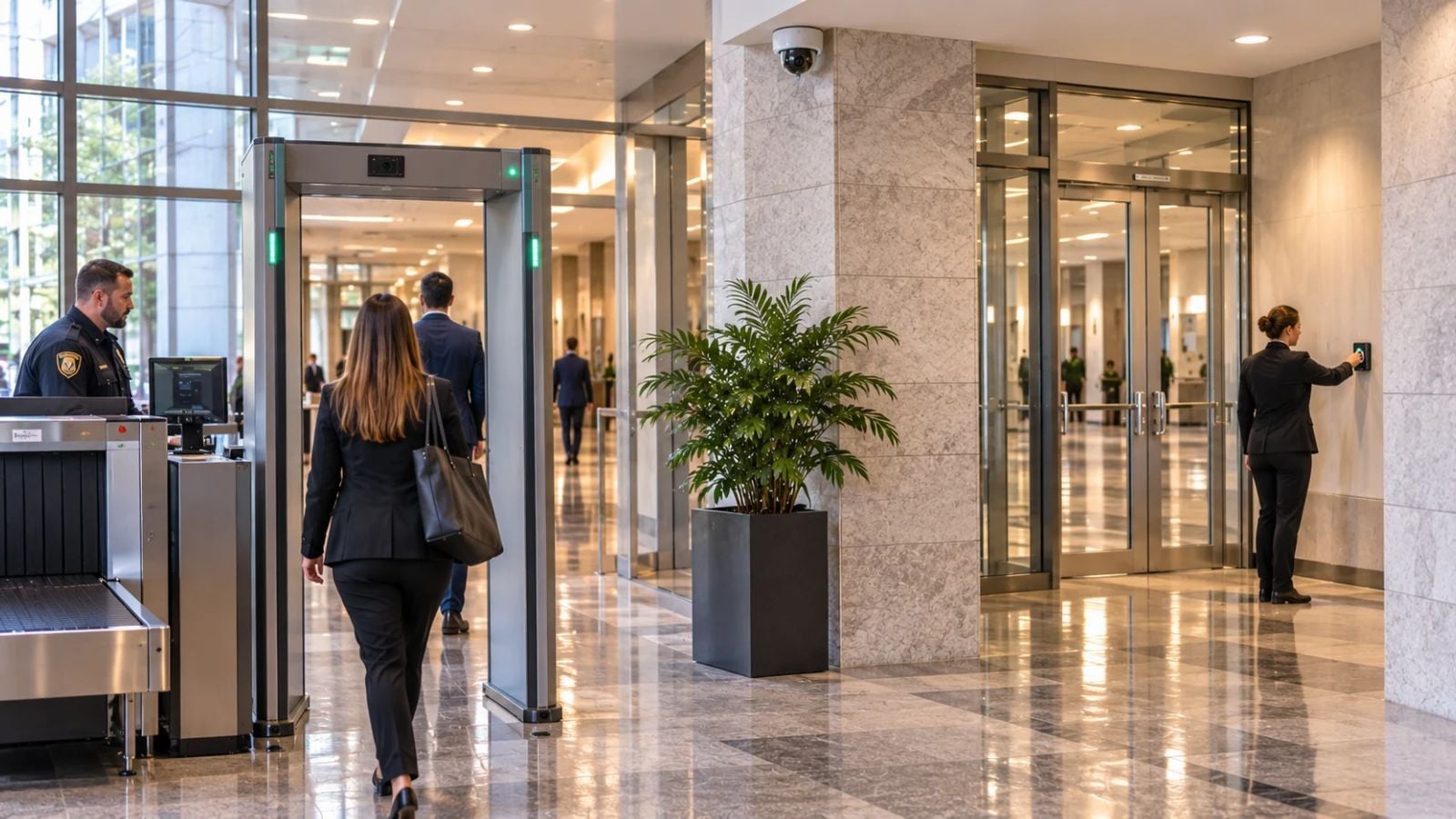
Securing the Courthouse Interior: The Technology Layer
In previous courthouse security blogs, we’ve explored the physical features and operational practices that help protect courthouse occupants, from exterior security and public screening areas to circulation paths and courtrooms. While these measures provide an important foundation, technology adds another layer of protection, helping courthouse security personnel monitor activity, control access, identify threats, and respond to emergencies.
Access control systems, duress alarms, surveillance cameras, and screening equipment each serve a distinct purpose in protecting judges, court personnel, and the public. However, technology alone cannot ensure a secure courthouse environment. Its effectiveness depends on how well it supports the building's physical design, established security procedures, and the personnel responsible for maintaining courthouse security.
Integrating Technology into Courthouse Security
Through my experience conducting security assessments of courthouses and other public buildings, I have observed that security vulnerabilities do not always result from inadequate technology. Sometimes, they arise from how existing systems are used, how employees follow established procedures, or how security practices change over time.
Even well-designed security systems can become less effective when their intended purpose is not fully understood or when everyday practices create unintended vulnerabilities. This is why security assessments should evaluate more than the presence and condition of equipment. They should also consider how technology is used in daily operations and whether it still meets the facility's security objectives.
The following sections examine four key technologies that support courthouse interior security, along with common vulnerabilities and ways to improve their effectiveness.
Access Control: Who Goes Where, and Why It Matters
Ideally, courthouses provide separate circulation paths for the public, court staff, judges, and individuals in custody to maintain security and prevent unauthorized access to restricted areas. Electronic access control systems reinforce these separations by restricting access to designated areas. In older courthouses where the physical layout does not allow for fully separate circulation paths, these systems can also help establish secure boundaries within shared spaces.
Courts should assign access credentials based on each individual's role and security needs. For example, court staff may have access to designated staff corridors but not judicial chambers, while judges may have access to chambers and secure courtroom entrances. Authorized security personnel should control the movement of individuals in custody. When properly implemented, access control systems strengthen courthouse security while maintaining public accessibility.
Most access-control failures may seem minor at the time. They're a door propped open for deliveries, a badge borrowed because someone forgot theirs, a staff member holding a door for someone they recognize without checking their credentials. None of those feel like a security decision at the moment, but all of them quietly erase the separation the whole system was built on.
Effective access control helps reduce security risks by limiting unauthorized movement throughout a courthouse. However, even well-designed systems cannot prevent every potential security incident. Duress alarms provide an additional level of protection by allowing judges, court staff, and security personnel to quickly request assistance when a threatening situation arises.
Duress Alarms: The System Behind the Button
A duress alarm's effectiveness depends on more than the button itself. Equally important are the systems and procedures behind it, including how the signal is transmitted, who receives and monitors the alert, and how quickly first responders, such as court security personnel or local law enforcement, can reach the scene.
Testing duress alarms after installation is essential, but ongoing testing matters just as much. Staff turnover, changes in communication systems, and facility modifications can all affect how alarms function. For example, a courthouse that adds a new wing or changes its security provider may inadvertently disrupt an established alarm notification process. Regular testing helps ensure that alerts reach the appropriate personnel and that response times remain effective.
During security assessments, I often ask courthouse employees how familiar they are with duress alarms. While most know where the alarms are located, many are unsure what happens after they activate one. This highlights the importance of training employees not only on when and how to use duress alarms, but also on what to expect and how to respond while waiting for assistance. Ideally, staff training and alarm testing should occur at least quarterly, and whenever new employees assume their responsibilities or security systems change.
Camera Coverage and Sightlines: A Supplement, Not a Substitute
Surveillance cameras are an important component of courthouse security, but they should supplement, rather than replace, clear sightlines and active security monitoring. While cameras can provide valuable footage for reviewing incidents, their effectiveness in preventing or responding to threats depends on active monitoring and prompt response by security personnel.
Stairwells, corridors connecting holding areas to courtrooms, and underground or structured parking areas are common locations where visibility may be limited. During security assessments, these areas often warrant particular attention because they can create opportunities for incidents to occur without immediate detection. Improving sightlines and positioning security personnel strategically can help address these vulnerabilities, while cameras provide additional coverage where physical design or staffing limitations make direct observation difficult.
While surveillance cameras help monitor activity throughout a courthouse, screening and detection technologies provide another important layer of protection by identifying potential threats before they enter secure areas. Together, these technologies support a more comprehensive approach to courthouse security.
Screening and Detection: The Equipment Is Only Half the Job
Walk-through magnetometers, handheld wands, and weapons-detection systems play an important role in courthouse security by helping identify prohibited items at public entrances. However, their effectiveness depends on properly trained personnel and clear procedures for responding when an alert is triggered.
Screening personnel must understand how to operate the equipment, evaluate potential threats, and take appropriate action when prohibited items are detected. Regular training and established response procedures help ensure that screening equipment serves as an effective first line of defense.
Security gaps at screening checkpoints can have consequences throughout the courthouse. For example, a pocket knife or other weapon that passes through an inadequately staffed or operated checkpoint could reach a courtroom, public corridor, or other area of the building. These situations can place judges, court staff, victims, witnesses, and members of the public at risk, reinforcing the importance of consistent screening procedures and properly trained personnel.
Bringing It Together
Integrating courthouse security technologies helps improve situational awareness and supports a more coordinated response to potential threats. When duress alarms, access control systems, and surveillance cameras operate independently, security personnel may have to gather information from multiple sources during an incident. Centralized monitoring can streamline this process, allowing personnel to assess situations more quickly and coordinate an appropriate response.
Ongoing maintenance and testing are equally important to ensuring these systems function as intended. Keeping software and firmware current, reviewing access logs, and regularly testing alarm systems help identify potential vulnerabilities before they compromise security. Although these activities may be less visible than the technology itself, they are essential to maintaining a reliable security program.
Ultimately, technology is just one component of a comprehensive courthouse security strategy. Its effectiveness depends on how well it complements physical security measures, building design, established procedures, and trained personnel. By integrating these elements, courthouses can strengthen security while maintaining the accessibility necessary to serve the public effectively.
Get your copy of the Fundamentals of Courthouse Design
Morgan Sears
Morgan is a planner and data analyst with Fentress, Inc. She has a Master’s Degree in Sociology with a concentration in Criminal Justice. She enjoys baseball, running, and spending time with her husband and son.
Search:
Posts by Topic:
- Courthouse Planning (204)
- Telework (82)
- Open Office Design (71)
- School Security (49)
- Courtroom Design (34)
- Courthouse Security (30)
- Hybrid Office (27)
- Workplace Security (23)
- Workspace Strategy (17)
- Courthouse Technology (16)
- Return to Work (15)
- Space Utilization (13)
- Office Manners (10)
- Police Station Design (8)
- Flexible Workspace (7)
- Mobile Workforce Solutions (7)
- Remote IT Support (6)
- Space Reduction and Utilization (6)
- Space Transition (5)
- Change Management (2)
- Space planning (2)
- Integrated Building Design (1)
- Space Programming (1)