
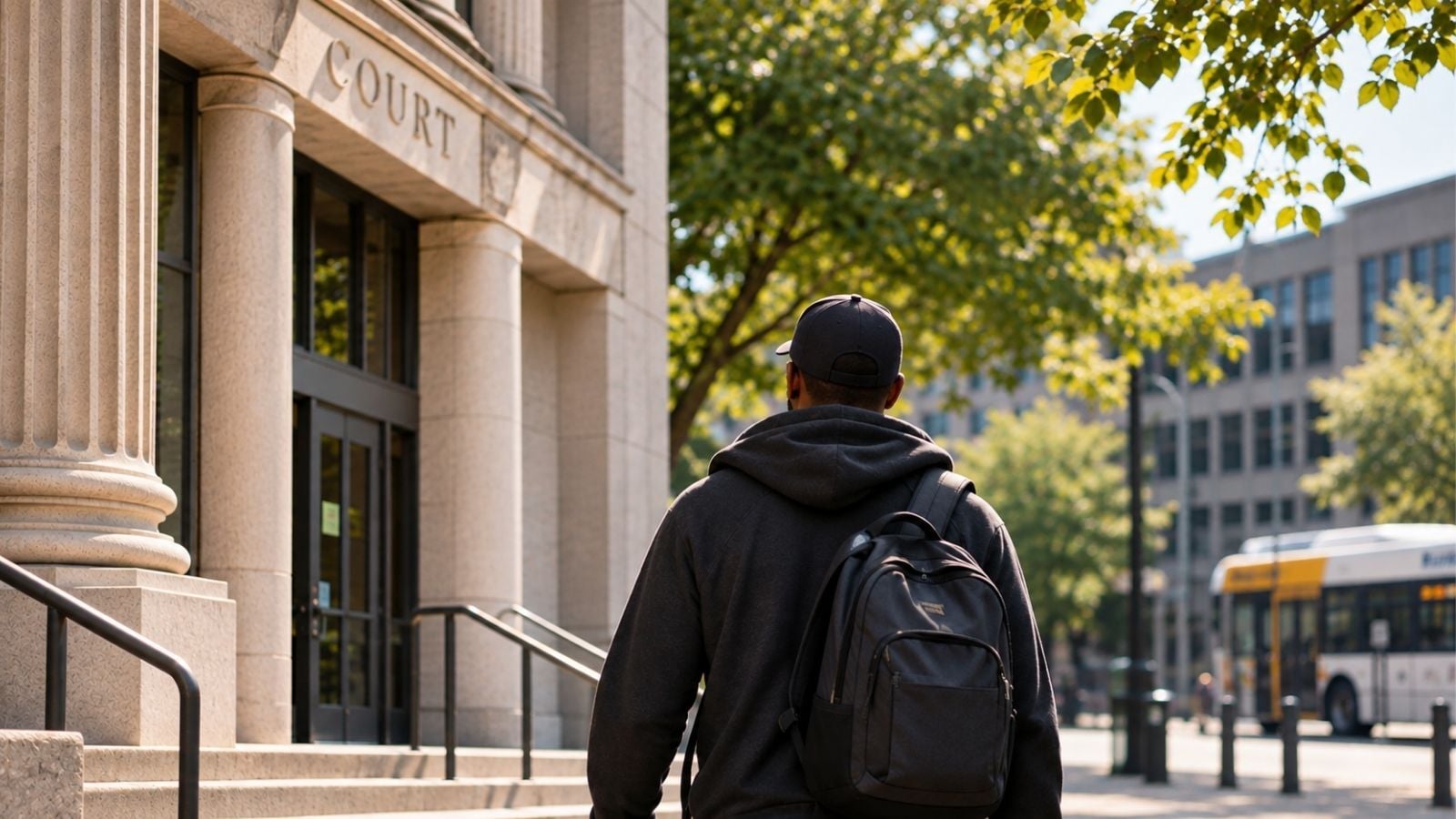
Reentry Courts: Connecting Reintegration with Courthouse Planning
At the recent American Planning Association (APA) Maryland biennial conference, a panel of representatives from organizations supporting formerly incarcerated individuals in Baltimore City discussed the challenges of returning to their communities. Panelists highlighted barriers involving employment, transportation, housing, and access to essential services, emphasizing the importance of coordination among community organizations and public institutions in supporting successful reintegration.
While many of these challenges extend beyond the courthouse, courts play an important role in helping individuals transition from incarceration back into their communities. Through specialized reentry programs, courts provide ongoing judicial oversight while coordinating with probation personnel, treatment providers, and community organizations to connect participants with available resources.
These programs also introduce unique considerations for courthouse planning. Unlike traditional court proceedings, reentry courts often involve recurring hearings, meetings with supervision personnel, and collaboration among multiple service providers. Understanding how these activities affect courthouse operations, space utilization, accessibility, and security is essential to planning facilities that can effectively accommodate specialized court programs.
The Role of Reentry Courts
Reentry courts are a type of problem-solving court designed to assist eligible individuals transitioning back into the community following incarceration. Reentry courts differ from conventional court proceedings by maintaining ongoing judicial involvement with participants as they work toward meeting the conditions of their supervision and establishing stability in their communities.
Judges work alongside probation or parole officers, treatment providers, and other community partners to monitor progress and connect participants with available resources. Depending on the program, participants may attend regular court hearings, receive substance abuse or mental health treatment, and participate in employment or educational services.
The Prince George's County, MD Circuit Court Reentry Court Program provides an example of how reentry courts support individuals transitioning from incarceration into the community. Established in 2013, the voluntary 18-month program begins with court-ordered treatment during incarceration and continues with intensive supervision and case management following release.
Participants attend regular judicial hearings and work with court personnel, case managers, and treatment providers to meet program requirements. The program demonstrates how reentry courts depend on coordination among multiple agencies, with activities taking place both within the courthouse and throughout the community.
Assessing Reentry Court Operational Needs
Effective courthouse planning begins with understanding how court programs operate and the people involved in carrying out their work. For reentry courts, this requires engagement with judges, probation officers, court administrators, and community service providers to identify the activities associated with the program and how they affect courthouse operations.
Stakeholder discussions can provide insight into how frequently participants appear before a judge, where meetings with supervision personnel take place, and how outside organizations participate in the program. These discussions can also clarify which services are provided within the courthouse and which take place at correctional facilities or community-based locations.
This information can be used alongside courtroom utilization data and existing space assessments to evaluate whether current facilities can accommodate the program's operations. For example, a reentry court that conducts periodic group hearings may be able to use an existing courtroom, while meetings involving probation officers and service providers may create additional demand for conference or interview space.
The appropriate arrangement will depend on the program's operations, the existing courthouse configuration, and the extent to which spaces are shared with other court functions.
Connecting Courthouse Planning with Community Support
Reentry courts rely on coordination between the judicial system and community organizations to help participants navigate the transition from incarceration. While many services are delivered outside the courthouse, court facilities must still accommodate the proceedings, meetings, and interactions necessary to administer these programs. Understanding how participants and service providers use the courthouse can help planners identify opportunities to improve accessibility, support coordination, and make effective use of existing space.
Accessibility for Reentry Court Participants
The transportation challenges discussed by the panel are particularly relevant for individuals who must regularly appear in court or meet with supervision personnel. For participants without access to a personal vehicle, reaching the courthouse may involve multiple public transportation connections, adding time and difficulty to an already demanding schedule.
Although courthouse planners cannot address broader transportation limitations, they can evaluate how easily participants can access court facilities. The availability of nearby public transportation, accessible building entrances, clear wayfinding, and the location of program activities within the courthouse can all influence how participants navigate the facility and access services.
Accommodating Community Service Providers
Reentry courts often work with organizations that provide employment assistance, treatment, housing support, and other services. Providers may be required to participate in court proceedings, meet with participants, or coordinate with judicial personnel at the courthouse.
Courts should understand the extent of this involvement before determining space requirements. For example, programs that regularly bring multiple service providers into the courthouse may benefit from conference rooms that accommodate multidisciplinary meetings or private interview spaces where participants can discuss sensitive matters. Meeting spaces should provide appropriate speech privacy and security measures and may also require audiovisual capabilities to allow for remote participation.
The location of these spaces is also important. Meeting rooms that are accessible to visiting providers and participants, while maintaining appropriate separation from restricted court operations, can help accommodate these activities without disrupting other courthouse functions.
Understanding how frequently providers visit and what activities they perform can help planners determine whether existing shared spaces are sufficient.
Evaluating Space Utilization and Flexibility
Reentry courts may operate on schedules that differ from standard court proceedings, with periodic group hearings and meetings involving multiple agencies. These activities can create space demands that may not be fully captured through analysis of traditional workload.
A courtroom utilization study can help determine whether reentry court sessions can be accommodated within existing courtroom schedules. Similarly, an assessment of conference rooms, interview spaces, and public waiting areas can identify opportunities to share facilities among court components.
Flexible space arrangements may be particularly valuable when reentry programs meet only on certain days or at scheduled intervals. Rather than assigning permanent space to every activity, planners can evaluate whether existing rooms can serve multiple functions while meeting the program's operational, privacy, accessibility, and security requirements.
This approach allows courts to accommodate specialized programs while making efficient use of available courthouse space.
Supporting Reentry Through Informed Planning
The challenges individuals face following incarceration extend beyond the courthouse, and addressing them requires the involvement of many organizations throughout the community. However, court facilities play an important role in accommodating programs that help individuals transition back into their communities. Reentry courts help bridge the gap between judicial oversight and community support, but their effectiveness depends on how well these efforts are coordinated.
By understanding how reentry courts operate and the needs of the people and organizations involved, courthouse planners can develop recommendations that support effective program administration and coordination with community service providers. Thoughtful courthouse planning helps ensure that the facilities supporting these programs are equipped to meet their operational needs and contribute to the broader effort of successful community reintegration.
Get your copy of the Fundamentals of Courthouse Design
Karissa Schlauch
Karissa is an analyst/planning consultant for Fentress, Inc. with a Master's degree in Industrial-Organizational Psychology. She loves fitness, her cats, and cheering on the South Carolina Gamecocks
Search:
Posts by Topic:
- Courthouse Planning (203)
- Telework (82)
- Open Office Design (71)
- School Security (49)
- Courtroom Design (34)
- Courthouse Security (30)
- Hybrid Office (27)
- Workplace Security (23)
- Workspace Strategy (17)
- Courthouse Technology (16)
- Return to Work (15)
- Space Utilization (13)
- Office Manners (10)
- Police Station Design (8)
- Flexible Workspace (7)
- Mobile Workforce Solutions (7)
- Remote IT Support (6)
- Space Reduction and Utilization (6)
- Space Transition (5)
- Change Management (2)
- Space planning (2)
- Integrated Building Design (1)
- Space Programming (1)