In this third and final post in my series on planning for the open office environment, I’ll look at the interplay between open office design and the needs of office occupants within the context of demographic variations.
Most often, when I review articles about planning for an open office environment, I find that they are illustrated with photos of stylish smiling young employees sitting in compact touchdown stations – sometimes even working on the floor with their laptops. I suspect that many of these photos were taken in new Silicon Valley offices where up-to-date technological skills are most prized. Still, in many offices, demographic diversity remains a fact. Our offices are filled with employees whose differences in gender, age, and abilities create unique challenges in planning office space.
Thus, we must examine whether our enthusiasm to accommodate the needs of a modern workforce has prompted us to ignore the needs of a demographically diverse workforce? The answer is more complex than you might think.
Examining the Open Office Environment
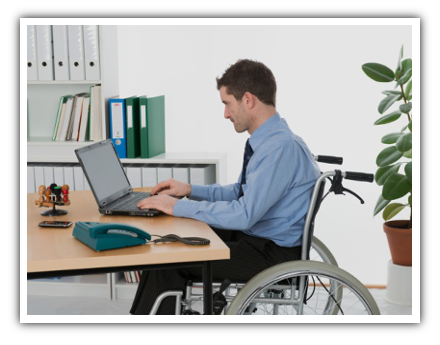 The American with Disabilities Act (ADA) is the law of the land. The strength of this law ensures that employees with disabilities affecting functions such as mobility, sight, or hearing will be accommodated in a manner that will allow them to work, irrespective of workplace design features. In fact, this kind of accommodation is sometimes easier to accomplish in a high tech open office environment than it might have been in a traditional office environment. Software applications for the visually and hearing impaired employee and flexible work areas for an employee who uses a wheelchair are more effectively provided in the open office.
However, open office designs often require workplace sharing and “one-size-fits-all” fixtures. This aspect may be one impediment to accommodating people with disabilities. As an example, an employee with chronic back pain who requires a special ergonomic chair may not be able to use a shared touchdown station or get away booth supplied with a standard chair.
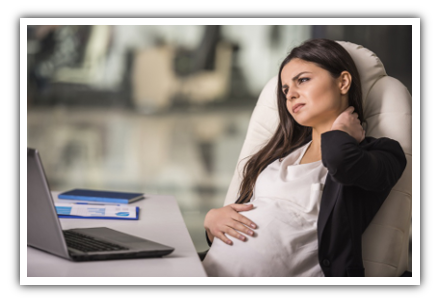 Workplace sharing may – at least temporarily – pose a similar problem for a pregnant woman as it does for a person with a bad back; the need to use a shared touchdown station or get away booth where the chairs and other furniture might not accommodate her interim physical limitations. Further, when a new mom returns to work, she may need access to a private lactation room, which requires another dedicated space that may not be readily available in an open office setup.
 Another exception may be the skeptical senior employee who has been required to give up his/her private corner office and move into an open workstation. Beyond the psychological impact of a perceived loss in status, an older employee may not be able to adjust his or her hearing to the background noise that is often present outside of a private office.
We are clearly and methodically moving in a direction where the modern collaborative and mobile office environment, and perhaps it successor environments, will be the norm. Still, we must recognize that not all change is uniform or instantaneous in open office environments. Be prepared to manage this change with considerable care and sensitivity to all employees in the workforce, regardless of their demographic profile.
Get your copy of the Fundamentals of Courthouse Design